
Your needs, this model
Does it fit your priorities?
Can I check food without replacing or recharging batteries?
The exact HSN configuration is described as kinetic: shake it to power the display. That supports a battery-free hand-held checking routine.
Explore this need in the finder →Does it have a folding probe for awkward pan access?
The channel instructions describe probe positions including an angled position for a pan or skillet. That is probe movement, not automatic rotation of the displayed numbers.
Explore this need in the finder →Can I select it for a specific high measuring temperature?
The current exact HSN reference does not establish a complete numeric range. Confirm the supplied instruction insert rather than borrowing a range from a different regional listing.
Explore this need in the finder →A battery-free way to take a hand-held reading
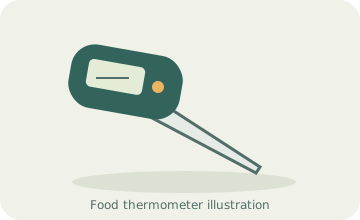
The Curtis Stone kinetic meat thermometer answers a small but real kitchen frustration: a digital thermometer whose battery needs attention just when you want to check dinner. The exact US HSN 855-271 configuration is described as shake-powered. You generate the power for the display by shaking the instrument, then use its folding probe for a hand-held food check.
That is a different proposition from a rechargeable probe. It avoids replacing batteries or remembering a charging dock for its documented spot-check routine. It does not mean the thermometer can stay in an oven, send a remote alert or measure indefinitely without another shake.
Check the actual configuration
This review follows the current branded HSN reference, including its stated contents and operating description. Curtis Stone’s own site identifies the brand’s product business and its relationship with HSN. The older Canadian TSC483-863 listing describes a kinetic thermometer with different dimensions. A shared concept is not enough to make those regional references one proven specification sheet.
The current exact HSN material does not establish a complete numeric measuring range. If a particular cold or hot temperature is essential, confirm it on the supplied instruction insert before choosing this configuration. A plausible number copied from the older Canadian listing would be less useful than an honest boundary.
How the folding probe helps
The channel description gives several probe positions, including an angled position for a pan or skillet and a straighter position for grill access. The practical benefit is choosing a comfortable approach to the food while holding the display outside the cooking heat. It can help when a pan rim or the shape of the food makes a straight approach awkward.
This is movement of the probe, not proof that the screen’s characters rotate automatically. Those are different questionnaire needs. A cook primarily concerned about reading upside-down numbers should choose a model that explicitly documents display rotation rather than assuming every folding instrument does it.
Use the display as a fresh check
The exact description identifies an LCD and a Fahrenheit/Celsius control. Power it as directed, position the sensing part appropriately and obtain a fresh reading. A displayed number from one part of a roast is not a substitute for checking another position if that is what you need to know. Likewise, the instrument should not contact bone or a hot pan when your purpose is measuring the food.
The reference does not establish a programmable temperature alert. It should be considered a tool you actively use and look at, rather than equipment that will call you back when dinner reaches a chosen target. If an alarm is your main need, a documented leave-in monitor is the more relevant comparison.
Care without assuming dishwasher permission
The current care description says not to submerge the thermometer and not to use abrasive cleaners. It does not establish dishwasher permission for the probe or the complete body. Folding a dirty probe into the housing is not a cleaning step; clean and dry the food-contact area according to the supplied instructions before storage.
For cooking decisions, follow current guidance for safe internal temperatures and relevant rest times. Kinetic power changes how the instrument is powered, not which temperature is appropriate for every food.
Who benefits most?
Consider this configuration if you want an attended, hand-held check and value not maintaining batteries. It is especially worth comparing with other passive or battery-free tools, while remembering that a digital shake-powered display is read differently from a dial left in a roast.
Choose a better-specified instant-read pen if a particular range, calibration adjustment or rotating readout is essential. Choose a documented oven monitor if the thermometer needs to remain in the food. The kinetic model’s appeal is its power routine and folding access, provided those are the features you actually need.
Sources: exact HSN 855-271 branded product reference and Curtis Stone’s official brand site.
Key details at a glance
| Documented spot-check use | Yes |
|---|---|
| Included food probes | 1 |
| Fahrenheit display | Yes |
| Celsius display | Yes |
| Measuring without batteries or charging | Yes |
| Power arrangement | Kinetic operation: shake the instrument to power the display; no replaceable batteries or electrical charging described for this exact HSN configuration. |
| Care notes | Do not submerge; avoid abrasive cleaning products. No explicit dishwasher permission established in the exact channel instructions. |
Use the exact model’s instructions for operating limits, supplied equipment and version differences.
Sources for this assessment
Find a thermometer for your cooking routine.
Compare the documented measuring setups, included equipment and features that matter to you.