
Your needs, this model
Does it fit your priorities?
Can I hear when one oven dish reaches a selected temperature?
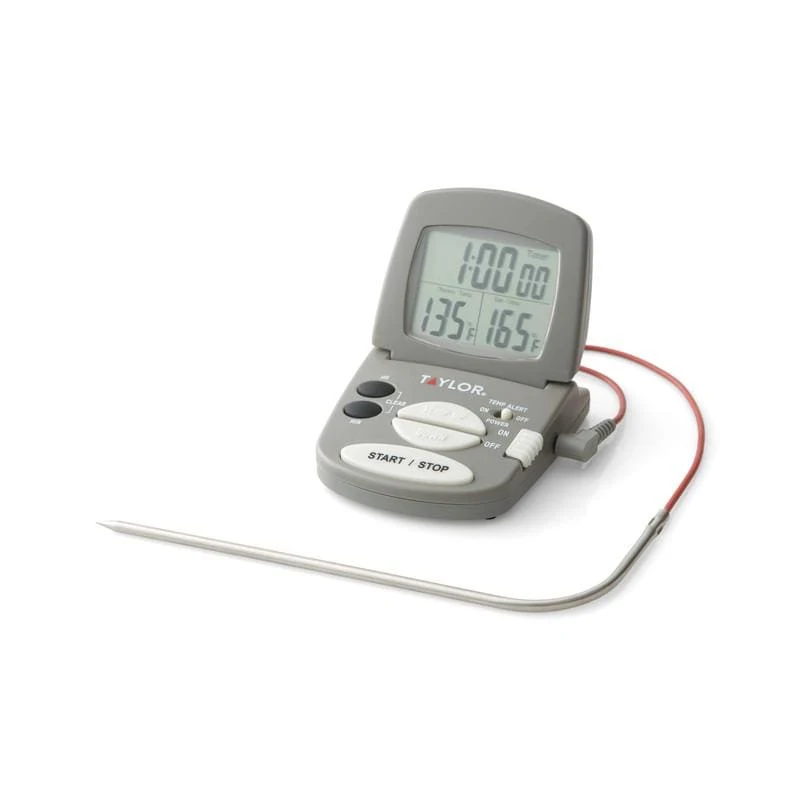
Yes. The 1470 N has a programmable local food-temperature alert and an outside display. Make sure TEMP ALERT is enabled.
Explore this need in the finder →Does a 485°F cord claim make it suitable for a 450°F surrounding-heat requirement?
Not established. The product page gives a 485°F cord claim, but the linked manual forbids using the cord and probe above a 392°F oven temperature. Resolve the supplied assembly before high-heat use.
Explore this need in the finder →Can I monitor two dishes with the included equipment?
No. This is one supplied probe and one food-reading channel; the timer is not another temperature sensor.
Explore this need in the finder →A straightforward alarm for one oven dish
The Taylor 1470N is for a cook who wants to follow one food temperature from outside the oven. A cabled probe stays in the dish while the display remains on the counter or another appropriate cool position. You can see the reading without opening the door, and a selected temperature can trigger a local alarm. There is no app to install or receiver to pair.
The main limitation is one measurement channel. The timer is useful for elapsed time, but it does not add another food probe. If you regularly cook two dishes that need independent targets, compare a true multi-probe package rather than expecting this unit to report both temperatures in turn without moving the probe.
Set the temperature alert deliberately
The controls separate the target-temperature function from the timer. Set the intended temperature, select the correct display unit and make sure the temperature-alert switch is enabled. An alarm being available does not mean it will sound if you have left that function turned off. It is worth checking the setup before the oven is full and the cable is hot.
The local display shows the actual reading alongside the target. That helps you judge progress, but a temperature rise at one point is still only one point. Position the tip inside the food where you need the measurement and clear of bone or the pan. If another area needs checking, use a separate spot-check instrument instead of assuming all parts follow the same curve.
There is a real heat-rating discrepancy to resolve
Taylor's current product description gives a 485°Fcord figure, while its linked 1470N instruction sheet says not to use the cord and probe in oven temperatures above 392°F. The two statements describe different limits and do not support a confident high-heat promise for every assembly sold under the name.
For a high-heat task, follow the instructions supplied with the actual probe and seek clarification if they conflict with the listing. Do not use a cord-only headline to overrule a lower operating restriction. The displayed food range is 32°F–392°F, which is a separate question from how much surrounding heat the exposed probe and cord can tolerate.
Route the cable before closing the oven
A wired monitor is most convenient when its layout is planned. Put the display on a stable cool surface, leave enough cable to reach the food and check what happens when the door closes. Taylor warns against crimping the wire or exposing it to a cooking surface or flame. A long cable is helpful only if its route remains protected throughout the cook.
The magnetic back and stand offer ways to position the display, but the electronics still belong outside direct heat. Also allow room to remove the pan without dragging the display or pulling the connector. This is a small preparation step that can make the difference between a tidy monitoring arrangement and a cable crossing the busiest part of the kitchen.
Keep the connection dry
The 1470N uses two AAA batteries. Check them before an infrequent holiday cook, and switch the unit off for storage. Clean the metal probe as instructed and keep water out of the plug and display opening. Moisture there can cause an incorrect reading, so drying is part of preparing the thermometer for its next use, not simply a cosmetic finishing step.
Choose the 1470N for a local, single-food oven routine within the instructions for the exact assembly. Choose a dedicated receiver model if you need to carry the reading elsewhere. If you own the original Taylor 1470, use that model's instructions; the extra letter is not a reason to transfer specifications blindly. For targets and required rest times, use current food-safety guidance.
Key details at a glance
| Documented leave-in monitoring | Yes |
|---|---|
| Included food probes | 1 |
| Fahrenheit display | Yes |
| Celsius display | Yes |
| Dishwasher-safe food probe | No |
| Measuring without batteries or charging | No |
| Documented food range minimum | 32°F |
| Documented food range maximum | 392°F |
| Probe length | 152.4 mm |
| Power arrangement | TwoAAA batteries included. |
| Care notes | Hand wash the metal probe. Do not immerse the display, plug or cord, crimp the cable or let it touch flames or a cooking surface. |
Use the exact model’s instructions for operating limits, supplied equipment and version differences.
Sources for this assessment
Find a thermometer for your cooking routine.
Compare the documented measuring setups, included equipment and features that matter to you.